
Understanding Chippewa County Releases
A release from Chippewa County Jail is an exit from that jail’s custody. It does not always mean the person walked into the community or that a court case ended. Bond, a court order, dismissal, time served, sentence expiration, and other lawful grounds can lead to a community release. A movement to another county, the Minnesota Department of Corrections, federal custody, or ICE is instead a transfer. The sheriff’s out entry and movement code are the best local records for telling those paths apart.
The official county page is headed “In Custody.” It shows who is listed when the page is generated, not a history of Chippewa County released inmates. A missing row proves only that the person is no longer shown there. A VINE event can add timely context, while the court docket explains what a judge ordered. The source agency’s dated custody record still supplies the strongest account of the actual exit time, release reason, and destination.
Chippewa County Release Paths
Each release type points to a different next source. Terms in a custody system may be abbreviated, so request the code legend with the record rather than assuming that a short movement label has a universal meaning. “Discharge” can also describe the later end of an agency’s jurisdiction, not merely the day a person leaves a jail or prison building.
| Path | Meaning | Best next check |
|---|---|---|
| Bond or court order | Local custody ends after the authorized terms are processed. | Sheriff out entry and MCRO court file |
| Time served or sentence complete | The stated local custodial term ends, though probation or another case may remain. | Jail record, sentence, and supervision record |
| Dismissal | A charge result changes, but another hold may still control custody. | Court disposition and jail movement record |
| Minnesota DOC transfer | The person leaves county custody for a state commitment. | Minnesota DOC Public Viewer |
| Federal or ICE transfer | Custody changes agencies rather than ending. | County destination field, then BOP, USMS, or ICE |
- Time served
- The court or custodian treats the required local custody as complete.
- Supervised release
- The community portion of many executed Minnesota prison sentences.
- Probation
- Court-ordered supervision that can follow a stayed or limited custodial term.
- Discharge
- The end of the sentence or agency jurisdiction, which may occur after physical release.
Chippewa County Release Record Fields
A useful Chippewa County release record connects one admission with one exit. Identity fields reduce the chance of mixing people with similar names. Movement fields then show whether the person returned to the community or went to a receiving authority. Ask for existing public data, including any code definitions, instead of asking staff to create a new narrative or legal conclusion.
| Field | What it shows |
|---|---|
| Name, MNI, booking number | Links the exit to the correct county booking. |
| Admission and booking time | Marks the start of the recorded custody episode. |
| Release date and actual out time | Marks when the jail completed the movement. |
| Release authority or reason | Identifies bond, order, time served, completion, transfer, or another code. |
| Receiving agency or destination | Separates a community release from a transfer. |
| Court file and holding authority | Connects the jail event to the case or agency basis. |
| Bond and detainer fields | Provides context without replacing the actual out entry. |
| Booking photograph | Links the public image, if maintained and public, to that booking. |
The county’s live roster shows intake-focused data such as photo, MNI, age, booking number, charges, and bail or bond. It has no visible out time, release reason, destination, or discharge status. A bail figure does not prove payment, and even a bond receipt should be read with the custody exit. Website visibility is also separate from record retention. When a row vanishes, ask the Sheriff’s Office for the underlying public record and any applicable retention schedule.
Request Chippewa County Release Records
The Chippewa County Sheriff’s Office accepts report requests in person, by mail, or by phone. Direct a jail-data request to the Law Enforcement Center at 629 North 11th Street, Suite 14, Montevideo, MN 56265, or call 320-269-2121. General county public hours are Monday through Friday, 8:00 a.m. to 4:30 p.m.; confirm the records unit’s availability before traveling. The Sheriff FAQ states a $3 sheriff or accident report fee, but that amount is not guaranteed to cover a custody dataset or booking photo.
- Identify the person with the booking number, MNI, intake date, or other limited details that distinguish the correct record.
- Request existing admission, out-time, movement-reason, receiving-agency, bond, court-file, and booking-photo fields under the Minnesota Government Data Practices Act.
- Ask for the code legend and the statutory basis for any field withheld. Request segregable public data when part of the record is restricted.
- Choose inspection first when practical. The county guide says viewing authorized public data has no fee.
- Ask for a cost estimate before copies. The guide lists ordinary copies at 25 cents per page unless another law applies.
- Compare the delivered movement entry with the court file and any destination system before treating it as a community release.
Law Enforcement Center
629 North 11th Street, Suite 14
Montevideo, MN 56265
320-269-2121
General county hours: Monday–Friday, 8:00 a.m.–4:30 p.m.
The county data guide contains older official names, so confirm its form, routing, and charges with the current Sheriff’s Office. It says an estimate of at least $50 may require 50 percent prepayment. Its five-working-day statement concerns a data subject’s request and is not a promised deadline for every public request. Under state law, public data that is not immediately available must be supplied as soon as reasonably possible.
Which Chippewa Release Fees Apply?
Chippewa County lists several jail-related amounts that serve different purposes. The 2026 fee schedule lists a $25 booking fee, $25 per day for pay-to-stay, and a $25 daily Huber fee paid one week in advance. Huber, also called work release, permits a sentenced person to work during approved hours and return to jail when not working. It remains custody and should not be described as a full release.
Those correctional charges are not the price of public records. The separate county data guide treats inspection as free and lists ordinary copy charges, while the Sheriff FAQ states a $3 report fee. Ask which record product applies before paying. This distinction matters when requesting the out entry, release code, or booking photograph.
Note: A booking or Huber charge says nothing by itself about whether or when a named person left custody.
Law Behind Chippewa Release Records
Minnesota Statutes § 13.03 provides the general right to inspect public government data and sets copy rules. Section 13.82 classifies specified adult arrest data and booking photographs as public at the originating agency. A booking image may be withheld for a time when access would harm an active investigation. Public status on request does not require the county to maintain a permanent web gallery.
Corrections and court-services records also contain protected material. Medical, psychological, victim, juvenile, active investigative, institutional-security, and some personal data can be restricted. Expungement under chapter 609A generally seals covered records from public view rather than proving that custody never occurred. MCRO may also omit a nonconviction case from a person-name search. A no-result must therefore be reported as a search result, not a factual conclusion about the past.
Chippewa County Jail Release Context
The 2025 Minnesota DOC inspection identifies Chippewa County Jail as a secure coed county jail with 17 approved beds. Its stated operating authority runs from August 1, 2025, through July 31, 2027. A later state corrective-action letter says the county supplied adequate corrections after a follow-up. These are facility findings, not evidence about any person’s release.
The report’s 85 percent operational-capacity calculation equals 14.45 beds. It is not the share of a prison sentence that Minnesotans serve. Release dates must come from the governing sentence and custody records, not a facility-capacity figure.
Find Chippewa County Released Inmates
Begin with the most likely custodian. A recent local arrest points to Chippewa County Jail. A commitment to the commissioner points to Minnesota DOC. A federal sentence points to BOP, while federal pretrial custody may belong to U.S. Marshals. Immigration detention uses ICE. Record the time of one official current-status check, then use the appropriate event and records path.
- Check the official Chippewa County In Custody list once. Note the time and match the booking identifiers.
- If the record is active, search or register with Minnesota VINE for a county custody event.
- Request the sheriff’s actual out time, movement reason, and receiving agency. Do not infer those fields from a missing roster row.
- Review the MCRO court file for bail, sentence, warrant, amended order, probation, and disposition entries.
- Follow the destination. Use Minnesota DOC, another county, BOP, USMS, or ICE only when the record points there.
- Reconcile conflicts. Keep an expected date separate from the actual custody event and ask the source agency to correct a proven error.
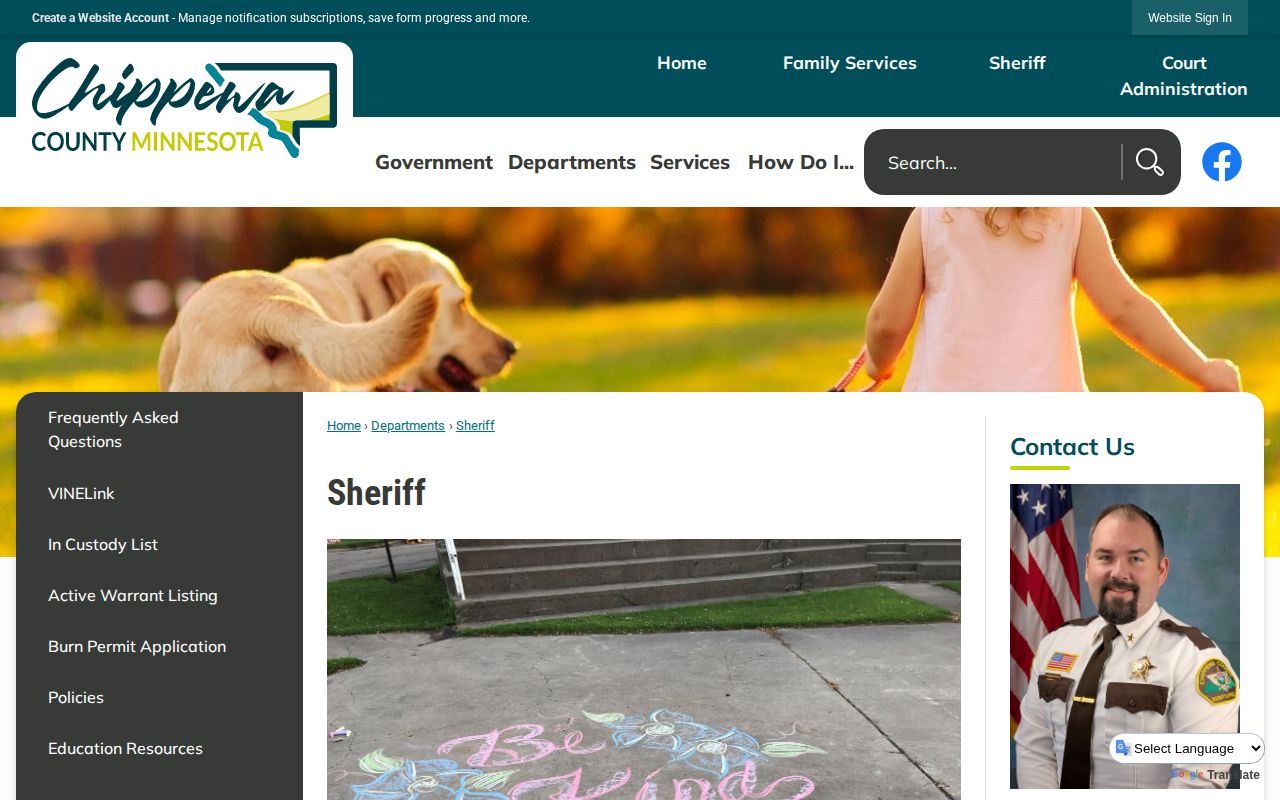
The official Sheriff gateway links the current roster, warrant page, and VINELink. Its layout makes the difference between those tools clear.
Minnesota DOC Chippewa Release Search
The Minnesota DOC Public Viewer is the right source after a Chippewa County case leads to state prison or DOC supervision. Search by first and last name or a complete six-digit MNDOC Offender ID. Name searches use prefixes and include DOC name history. A new commitment may take several business days to appear.
| Field | How to read it |
|---|---|
| Name, birth date, AKA | Match identity and name history. |
| MNDOC Offender ID | Use the complete six-digit number for the narrowest search. |
| Current Status | Distinguishes prison custody from a community supervision status. |
| Sentence Date | Marks the sentence entry, not physical release. |
| Anticipated Release Date | Shows forward-looking prison-release information. |
| Expiration Date | Shows the displayed jurisdiction endpoint, which may be later. |
| Caseworker and court file | Supports follow-up on the calculation and court source. |
The official Minnesota DOC search form can be reviewed before entering a name.
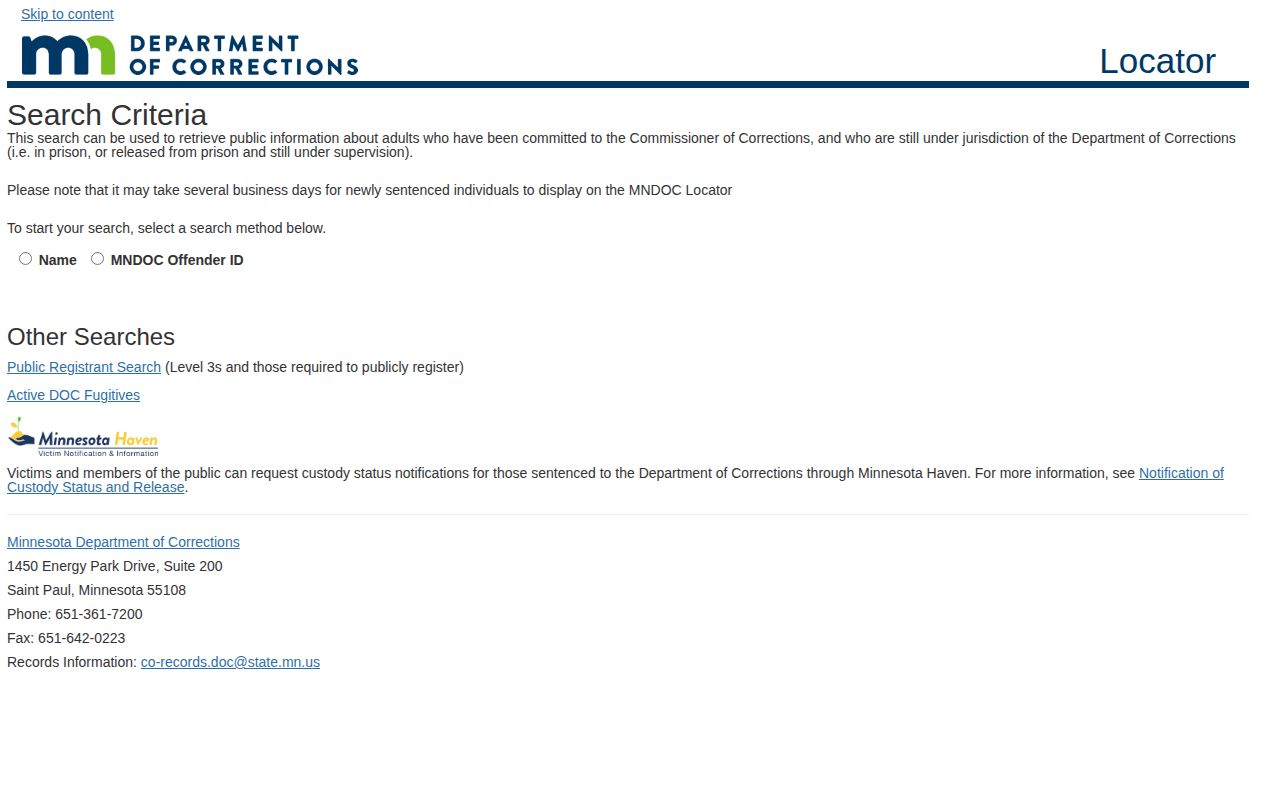
A community supervision status can confirm that someone left the prison building while remaining under DOC jurisdiction. A finally discharged person may fall outside the viewer’s stated scope. When no result remains, contact DOC Records Management and compare the reply with the Chippewa County court file.
Chippewa County Recent Release Limits
No official 24-hour or 72-hour Chippewa County release feed was identified in the reviewed Sheriff page, county navigation, or LETG interface. The current list displays photo, MNI, name, sex, age, booking number, intake date, charges, and bail or bond. It offers no release switch, out field, date-range search, or archive control. Comparing saved snapshots would not fix that limit because a row can disappear for several reasons.
For a same-day event, use VINE while the county record is active, call the jail, and request the exact out time and movement reason. For a three-day window, ask whether the Sheriff maintains existing public booking-release data for the exact start and end times. The Minnesota Government Data Practices Act does not force staff to create a new report that the office does not keep.
Note: VINE county feeds often refresh every 15 or 30 minutes, but the visible LETG roster has no promised cadence.
Chippewa County Release Supervision
Chippewa, Lac qui Parle, Swift, and Yellow Medicine Counties use 6W Community Corrections for local probation and supervised-release work. Its central office in Montevideo gives residents a real local contact, but the agency does not publish a person-name lookup. Confirm a public status through DOC Current Status, MCRO, the relevant court, or a request for public adult court-services data.
Probation and supervised release are not interchangeable. Probation comes from the court, often with a prison term stayed or limited. Supervised release is commonly the community portion of an executed prison sentence. Parole now applies to narrower life, old indeterminate, and qualifying under-18 review classes. Final discharge ends jurisdiction, while supervision abatement can end active check-ins before the displayed expiration date.
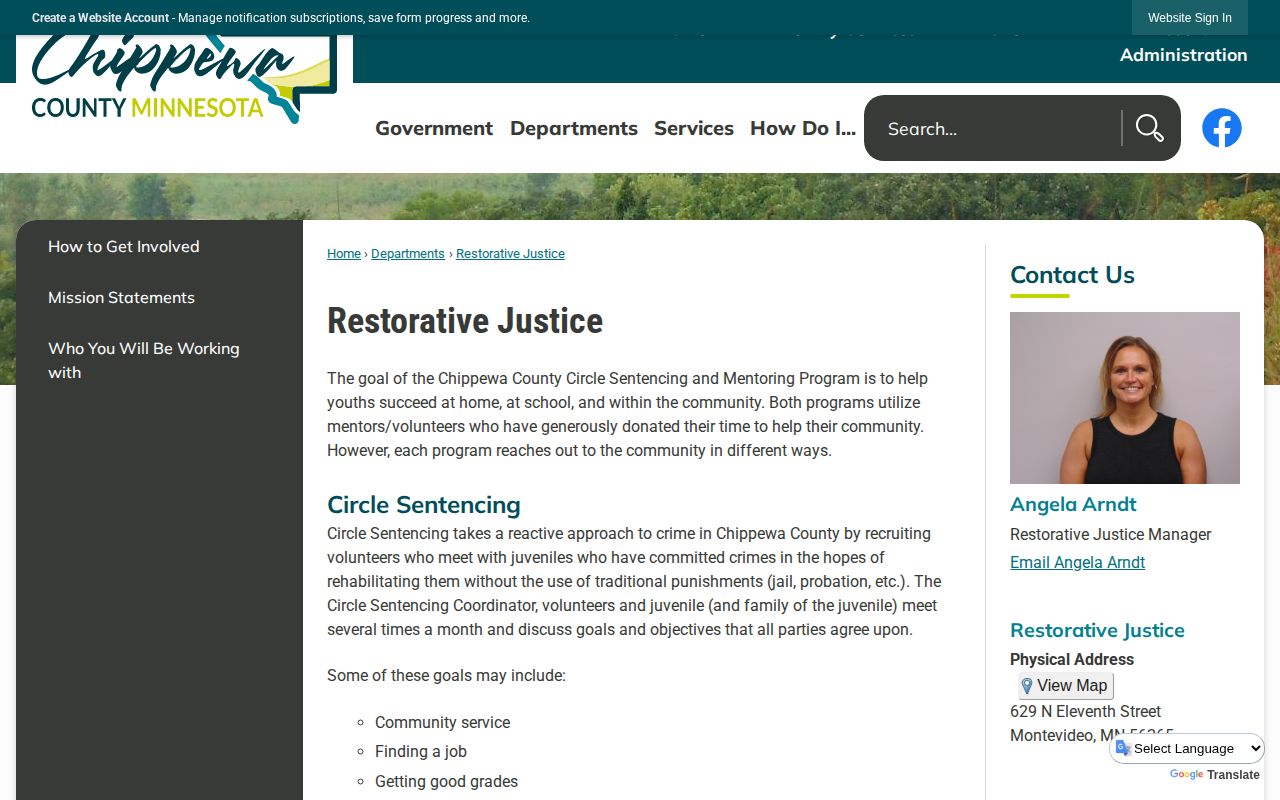
For program navigation, Chippewa County also lists Restorative Justice and Circle Sentencing information.
Chippewa Release Alerts and Transfers
Minnesota VINE connects only to county jails and detention facilities in the state. Register while a Chippewa County Jail record is active, then read the event message carefully because release, transfer, escape, and death are different events. Minnesota state-prison notification uses Minnesota HAVEN instead. A county VINE no-result must not be treated as proof about DOC prison custody.
Federal systems divide the work again. The BOP locator can retain many former federal prisoners and display a released status and date. U.S. Marshals custody has no comparable public historical locator, so use the federal docket, District of Minnesota contact, or the actual holding facility. ICE’s locator serves current detention and can include a recent ICE release within its stated window. None proves the event at Chippewa County Jail unless the county movement record connects the systems.
Is an ICE Handoff Release?
An ICE detainer handoff is not a release to the community. It means local custody ends and immigration custody may begin. First request the Chippewa County movement code and receiving-agency field. Then use the ICE Online Detainee Locator for current detention or the recent ICE-custody window. A search can use an A-number and country of birth or exact name and country of birth.
If the locator is inconclusive, ICE’s detention information line is 1-888-351-4024, Monday through Friday, 8:00 a.m. to 8:00 p.m. Eastern. No reviewed official source establishes Chippewa County Jail as an ICE detention-contract facility. The relevant question is whether ICE took custody in the named case, not whether the local jail usually houses ICE detainees.
Match Chippewa Release Systems
Use the system that owns the stage of custody being checked. The sources overlap only in limited ways, and each can answer a different question about Chippewa County released inmates.
| Question | Correct source | Main limit |
|---|---|---|
| Is the person listed in the county jail now? | Chippewa LETG In Custody list | No historical release field |
| When and why did county custody end? | Sheriff custody/release record | Some linked fields may be restricted |
| What did the judge order? | MCRO and District Court | May not show the physical out minute |
| Did state prison give way to supervision? | Minnesota DOC Public Viewer | Not a permanent archive of final discharges |
| Did federal prison custody end? | BOP Inmate Locator | Does not cover all federal custody |
| Did ICE assume custody? | County movement record, then ODLS | ODLS is not a full historical archive |
Chippewa County Release Facilities
The Facility Map includes the local jail, a short-term courthouse holding space, and destination systems that can receive a person with Chippewa County ties. Minnesota has no identified state prison inside the county, so state commitments use the statewide DOC system. Federal and immigration entries describe possible custodians, not proof that any named person entered them.
- Chippewa County Jail holds local pretrial and sentenced adults; confirm its exits through Sheriff records.
- Chippewa County courthouse holding space is short-term court holding, not a separate jail roster.
- Minnesota state correctional facilities hold state commitments and track community supervision under DOC jurisdiction.
- Federal Bureau of Prisons facilities nationwide cover sentenced federal prisoners and many former prisoners.
- ICE detention system covers civil immigration custody and certain recent ICE releases.
- U.S. Marshals Service prisoner custody covers federal pretrial detention and transport.